Lookahead bias — any use of information not available at decision time — can be detected in a stranger's backtest through targeted audit questions aimed at its known channels: data revision timing, point-in-time availability, feature-construction windows, and execution assumptions, with the literature offering a standard rule — shift every input one period later and re-run; a material performance drop is the diagnosis.
Most lookahead is not fraud; it is plumbing. Vintage data gets replaced with revised versions, features get computed with tomorrow's information, fills get assumed at prices that required knowing the print. The result is always the same — performance too good for the information actually available — and the detection playbook is mechanical enough to run on any presented backtest, including your own.
What are the leak channels?
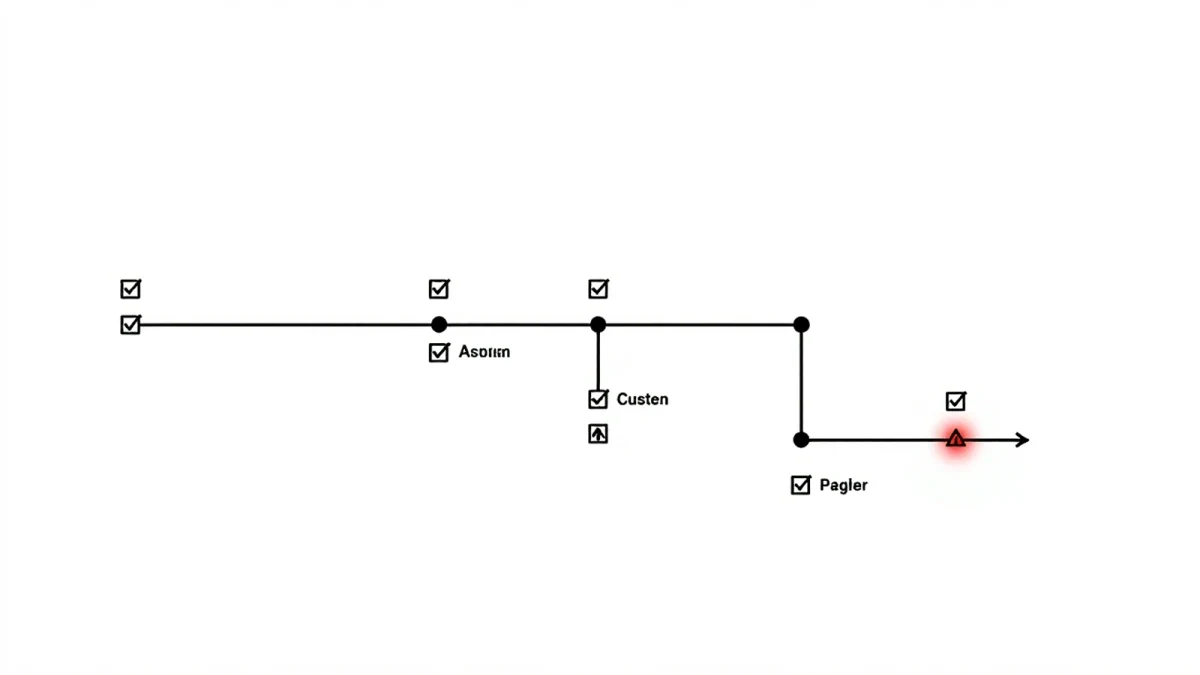
Four, in rough order of how often they explain suspicious results. Restated data: fundamentals revised after the fact, indices corrected, delisted tickers patched — a backtest run on today's database sees the corrected world, not the world that was. Point-in-time availability: analyst estimates, index membership, sentiment feeds and alternative data all have start dates and delivery lags; a feature available only from 2015 cannot honestly populate 2010. Feature-construction windows: ratios computed over full-sample statistics, normalizations fitted on all history, lookback windows that quietly include the current bar's close. Execution assumptions: fills at the exact close of a signal bar, at mid-quotes during stress, with no delay between signal and order — assumptions that require the future price to be known at decision time, which is the definition of the bias.
What is the shift test?
The single most informative diagnostic: rebuild the backtest with every input delayed one period — signals computed on data through yesterday act today, orders fill at next available prices — and compare. Honest strategies degrade slightly, by the cost of realistic delay; lookahead-dependent strategies degrade dramatically or die, because their edge was the delay itself. The test generalizes: delay fundamentals by a quarter, estimates by their publication lag, sentiment by its delivery timestamp. Each channel has its honest lag, and re-running at the honest lag is what point-in-time honesty means. A backtest whose presenter cannot or will not run the shift test has told you something, whatever the stated reason.
What documentary questions expose it?
An audit checklist, each question targeting a channel:
- Which vintage of data was used — point-in-time or as-revised — and how is that evidenced?
- For each feature: what was its actual publication or delivery date in each historical period?
- Were normalization or selection statistics computed inside the training window only?
- At what price does the backtest fill, and what interval elapses between signal and fill?
- How are stops and limits resolved — with intraday path data, or by assuming the worst/best case?
- What happened to positions on delistings, halts and gaps?
- How many configurations were tested across the program — the meta-count that contextualizes everything above?
Presenters of honest work answer these with specifics — vendor fields, timestamps, fill logs — because honest work has the documentation. Deflection, vagueness or indignation at the first two questions is itself data.
What are the classic tells in reported statistics?
Certain patterns raise prior probability of leakage. Performance that collapses in live trading while the backtest was smooth — the live/backtest gap is the practical definition, since live trading is the uncorruptible out-of-sample. Sharpe ratios implausibly high for the strategy's holding period and capacity. Winning exactly on the bar's close, repeatedly. Performance concentrated in exactly the periods with the richest data revisions — earnings weeks, index rebalances. And perfect handling of disasters: no losses on gap days, no positions during halts, because the path data that would have hurt was never in the simulation. None of these is proof; each is a question the audit list then asks precisely.
| Channel | Diagnostic question | Honest answer looks like |
|---|---|---|
| Restated data | Point-in-time or revised? | Vendor vintage field cited |
| Availability lag | Delivery date per period? | Timestamps matched to history |
| Feature windows | Stats fitted inside window? | Code or method statement |
| Execution | Fill price and delay? | Next-bar fills, real spreads |
| Meta-search | How many configs tried? | A number, with accounting |
What can you conclude, and not conclude?
With the checklist answered, you can locate which channel a suspicious result leans on, and with the shift test, quantify the leakage's contribution. What you cannot do is certify a clean bill: unaudited backtests remain unaudited, and the honest framing is degrees of demonstrated integrity — point-in-time data documented, execution delays modeled, configuration count disclosed. Model-risk guidance in banking formalizes the same standard for production models — independent validation, documentation, monitoring of live divergence — as the Federal Reserve's SR 11-7 guidance at federalreserve.gov records. The backtest you cannot audit is a claim; the audit questions are how claims become evidence.