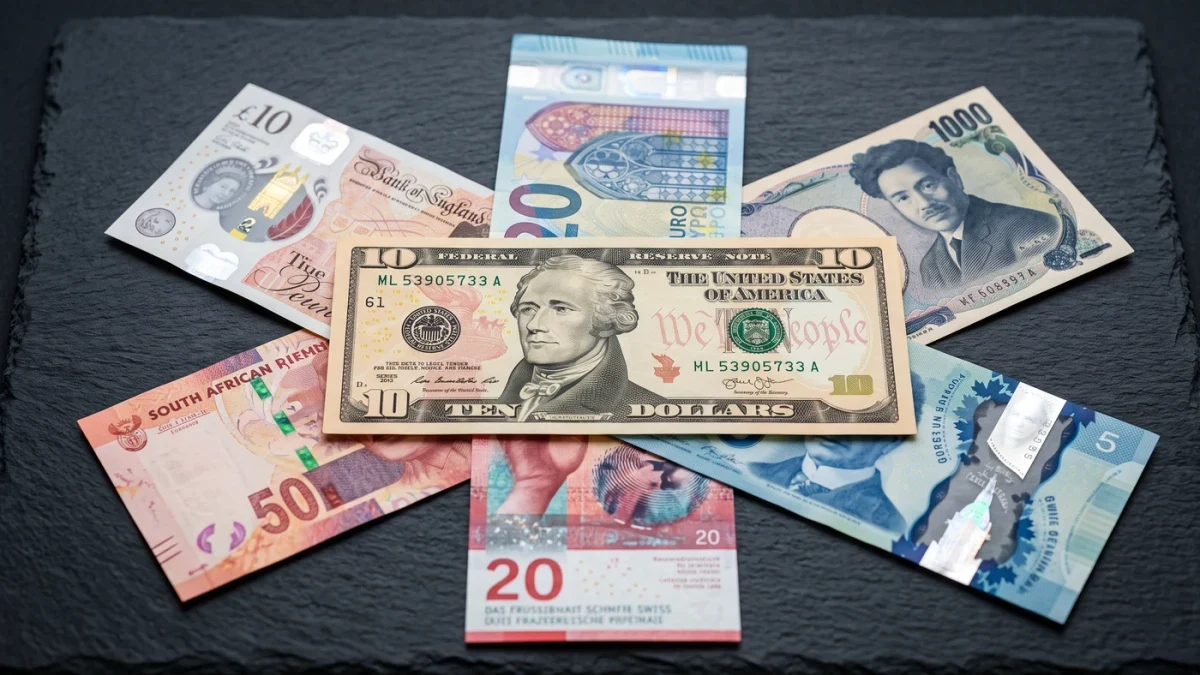
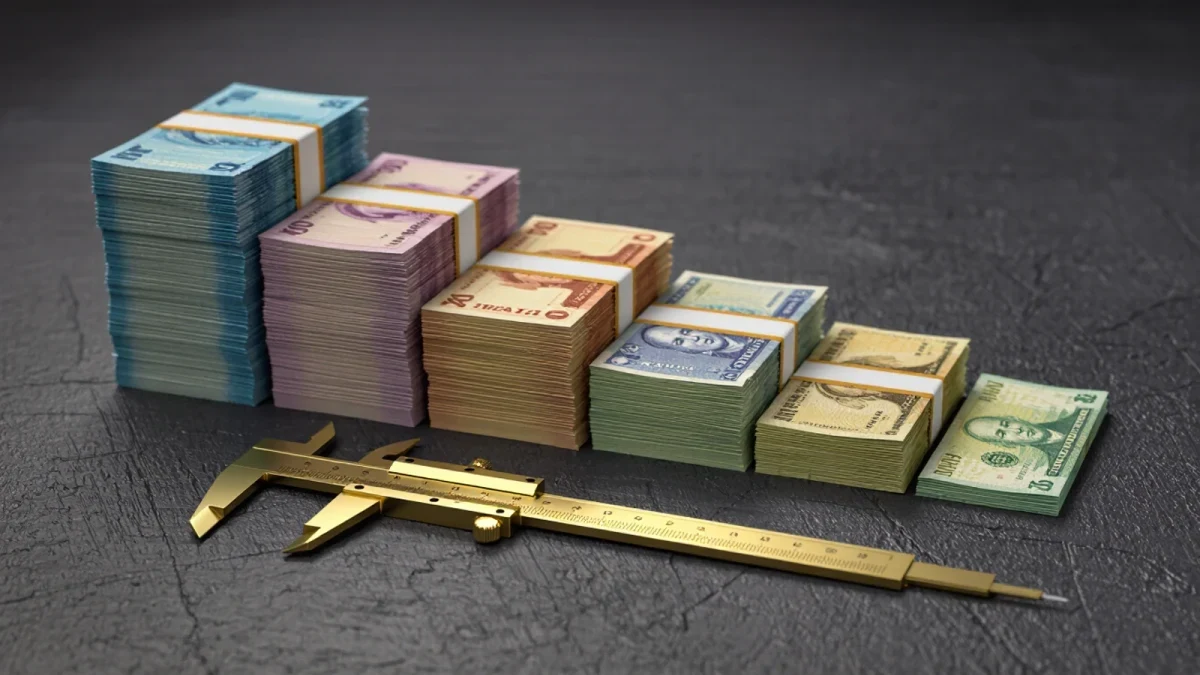
The U.S. Dollar Index (DXY) is a weighted average of the dollar against six currencies — the euro at 57.6 percent, the Japanese yen at 13.6, the British pound at 11.9, the Canadian dollar at 9.1, the Swedish krona at 4.2 and the Swiss franc at 3.6 — with weights fixed by trade patterns of 1973 and the construction documented by ICE, the index administrator, since its creation at the Federal Reserve in 1973 for internal monitoring.
"The dollar strengthened today" usually means a specific six-currency average moved — an index designed half a century ago for a different monetary world. The DXY remains the most-quoted dollar gauge in markets and headlines, and knowing exactly what is inside it explains most of its quirks, including why it can move differently from the trade-weighted measures the Federal Reserve publishes and the Treasury Secretary references.
Where did the index come from?
The Federal Reserve created the index in 1973, after the Bretton Woods system of fixed exchange rates ended, to track the dollar against the currencies of major trading partners; administration passed to ICE, which maintains the methodology and licenses the index for the widely traded futures and options. The base was set at March 1973 equaling 100, and the index has traded in a wide band since — the 1985 peak above 160 and the 2008 low near 70 bracket its history. The euro did not exist in 1973; its weight was constructed from the legacy currencies it replaced when the basket was last rebalanced — at the euro's 1999 launch — which is how a single currency inherited more than half the index.
What do the weights mean and not mean?
The weights are trade-shares frozen decades ago, not current economic relationships. Mexico — the United States's largest trading partner for most of recent years — is absent, as are China, Korea, India and Brazil. The euro's 57.6 percent means the DXY is, mechanically, more than half a euro inverse: when the euro moves, the DXY largely moves opposite, and other bilateral stories — dollar-peso, dollar-renminbi — do not appear in it at all. A reader who wants to know how the dollar behaves against U.S. trade partners as they are today needs the Fed's broad dollar index, which covers over two dozen currencies with modern trade weights, published alongside the DXY-relevant major-currencies index on the Federal Reserve's H.10 release.
DXY versus the Fed's trade-weighted indexes
The Federal Reserve publishes trade-weighted dollar indexes — the broad index and the major-currencies index — with weights updated to reflect current trade, maintained with published methodology. The three measures tell visibly different stories at times: episodes when the dollar fell against emerging-market currencies while holding against the euro show DXY roughly flat and the broad index falling. Headlines quoting "the dollar" without naming the index are quoting one specific basket — and in a period when trade has rotated toward partners the DXY excludes, the gap between the measures is itself a documented commentary on the index's vintage.
What is the index used for in practice?
Three live uses. Futures and options on the index trade at ICE with deep liquidity, making the DXY the standard hedging and speculative vehicle for dollar exposure — its liquidity, not its composition, is why it stays quotable. Cross-checks in commentary: dollar moves are narrated against commodities, which are largely dollar-denominated, and the DXY is the gauge in those narrations. And momentum and level references: technical commentary quotes DXY levels as though they were the dollar. The composition caveat applies to all three uses — most acutely to any inference about dollar strength against the parts of the world the basket omits.
| Constituent | Weight | In the 1973 basket? |
|---|---|---|
| Euro | 57.6% | As legacy currencies; consolidated 1999 |
| Japanese yen | 13.6% | Yes |
| British pound | 11.9% | Yes |
| Canadian dollar | 9.1% | Yes |
| Swedish krona | 4.2% | Yes |
| Swiss franc | 3.6% | Yes |
What other dollar measures exist?
Besides the Fed's broad and major-currency trade-weighted indexes, the ecosystem includes the Bloomberg dollar spot index and the WSJ dollar index — both spanning more currencies than the DXY with different weighting conventions — and a family of currency-specific real exchange rates published for policy analysis, which adjust nominal rates for relative price levels. Each measure answers a different question: nominal bilateral strength, trade-weighted competitiveness, or inflation-adjusted purchasing power. The professional habit worth copying is naming the instrument in the first mention — a convention financial data platforms enforce with tickers and headlines routinely discard.
Where does DXY quoting mislead?
Three recurring slips. Quoting the DXY as "the dollar against the world" — six currencies, euro-dominated, 1973-weighted. Comparing DXY levels across decades as though the basket were constant in meaning — trade patterns and the currency roster changed around it. And inferring emerging-market dollar strength or weakness from a DXY move — the index simply does not contain those pairs. The primary documentation is short and public: ICE publishes the index methodology and weights; the Federal Reserve's H.10 release publishes the trade-weighted alternatives with methods at federalreserve.gov. Name the basket before quoting it, and the dollar's daily story becomes considerably more precise.