
A mutual fund or ETF turnover ratio reports the lesser of purchases or sales of portfolio holdings divided by average assets over a fiscal year, so a 100 percent turnover fund replaced a sum equal to its entire portfolio during the year — and active U.S. equity funds have run average turnover in the roughly 60-to-90-percent range in recent years by industry measurements, against index funds' low single digits.
Turnover appears on every fund fact sheet, gets summarized in one line, and carries a precise meaning that the one-line uses routinely mangle. It is a pace statistic — how fast the book churns — and its consequences follow from arithmetic on costs and taxes rather than from any information about manager talent. High turnover is neither a sin nor a signal; it is a speed, and speed has a price schedule.
How is the ratio computed?
The standard formula takes the lesser of total purchases and total sales — the lesser so that both buying new money and raising cash do not double-count — divided by average monthly net assets. A fund that sold 80 percent of its book and bought 80 percent reports 80 percent, not 160. The ratio is annual and fiscal-year-based, so funds with December and non-December fiscal years are not directly comparable within a calendar year — a small convention that matters when comparing figures pulled from different data services. Excluded from most computations: in-kind creation-redemption activity in ETFs, which is why ETF turnover figures can read oddly low relative to the portfolio's actual position changes.
What are the documented cost consequences?
Trading costs money — commissions, bid-ask spreads and market impact — and those costs sit outside the expense ratio, borne by the fund. The magnitude is measurable in the transaction-cost literature: for liquid large-cap names, costs per trade are small; for small-cap, emerging-market and less liquid bonds, materially larger. The predictable product: turnover times per-trade cost. Two funds with identical expense ratios can therefore carry meaningfully different true costs if their turnover and liquidity profiles differ — a gap that shows up as tracking of nothing in particular for active funds, but as performance drag that academic cost studies have estimated at single-digit to low-double-digit basis points annually at moderate turnover in liquid markets, and worse in illiquid ones.
What are the documented tax consequences?
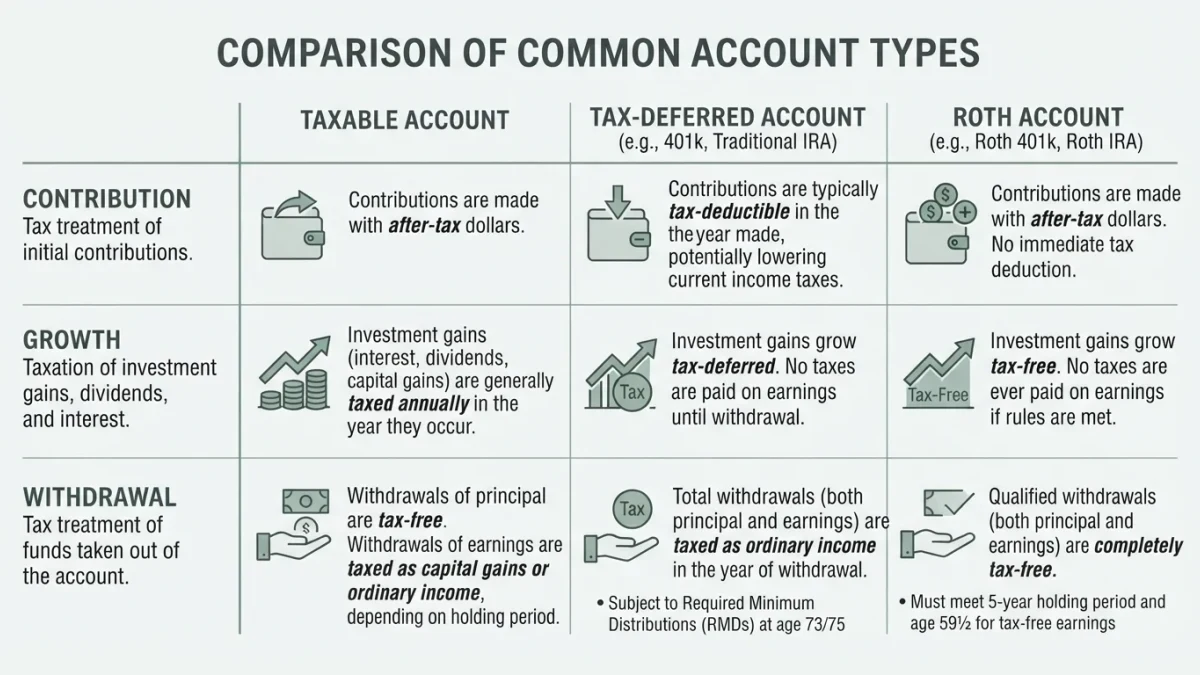
In taxable accounts, turnover realizes capital gains: every sale of an appreciated position is a distribution waiting to happen. Funds must distribute realized net gains annually, and high-turnover funds in rising markets have historically distributed larger and more frequent gains — a record visible in each fund's distribution history, which is public. The documented asymmetry: index funds' minimal turnover defers gains inside the portfolio indefinitely (the buy-and-hold tax advantage quantified in the after-tax literature since the 1990s and popularized by the index-fund cost analyses of that era), while high-turnover funds convert paper gains into taxable events on a schedule the shareholder does not choose. Tax-managed variants exist precisely to blunt this, at some tracking cost to their strategies.
What doesn't turnover tell you?
It does not measure skill, in either direction. A 5 percent-turnover fund is not disciplined if its static book is simply stale; a 300 percent-turnover fund is not talented because it trades; the ratio is silent on whether the trades added value, which is a performance question requiring return attribution against a stated benchmark. It does not measure risk directly, though very low turnover in an active fund can indicate drift from the stated strategy — styles wander as positions age. And it does not capture trading quality — whether executions harvested or leaked spread — which requires transaction-level cost analysis, the kind institutional investors commission and funds increasingly report under execution-disclosure regimes.
| Turnover level | Typical bearer | Predictable consequences |
|---|---|---|
| 1-5% | Broad index funds | Minimal cost drag; deferred gains in taxable accounts |
| 20-60% | Moderate active | Modest trading costs; periodic gain distributions |
| 100%+ | High-turnover active | Material cost exposure; larger, more frequent distributions |
How should a reader use the number?
As a screen for three checkable follow-ups. If turnover is high, check the fund's liquidity profile — what does it hold, and what do trades in those markets cost. If the account is taxable, check the distribution history — several years of realized-gain distributions are the direct observable consequence. If the fund is active and cheap-looking, check whether its stated net performance already embeds the trading costs — reported net returns do include them, which is why after-cost comparisons of net returns, not expense ratios alone, are the honest basis. Turnover is the beginning of those questions, not the answer to any of them.
The primary numbers sit in standardized fund documents — turnover in the fact sheet and prospectus, distributions in the tax forms funds issue annually — searchable through the Securities and Exchange Commission's EDGAR system, with investor-education material at investor.gov. Read the pace, price the pace, and decline any narrative that confuses motion with judgment.