
U.S. employers added roughly 50,000 jobs in December 2025, according to the Employment Situation release published January 9, 2026 by the Bureau of Labor Statistics — a weak close to a year of slowing hiring, and the first official read of a labor market that subsequent releases would revise substantially.
The December report closes the statistical year, which is also when its provisional character is greatest: benchmark revisions and population updates land with the following release, and the annual benchmark cycle for 2025 ultimately produced one of the larger downward rewrites in recent memory. The print below is therefore a vintage — a well-documented estimate scheduled for correction.
What did the release show?
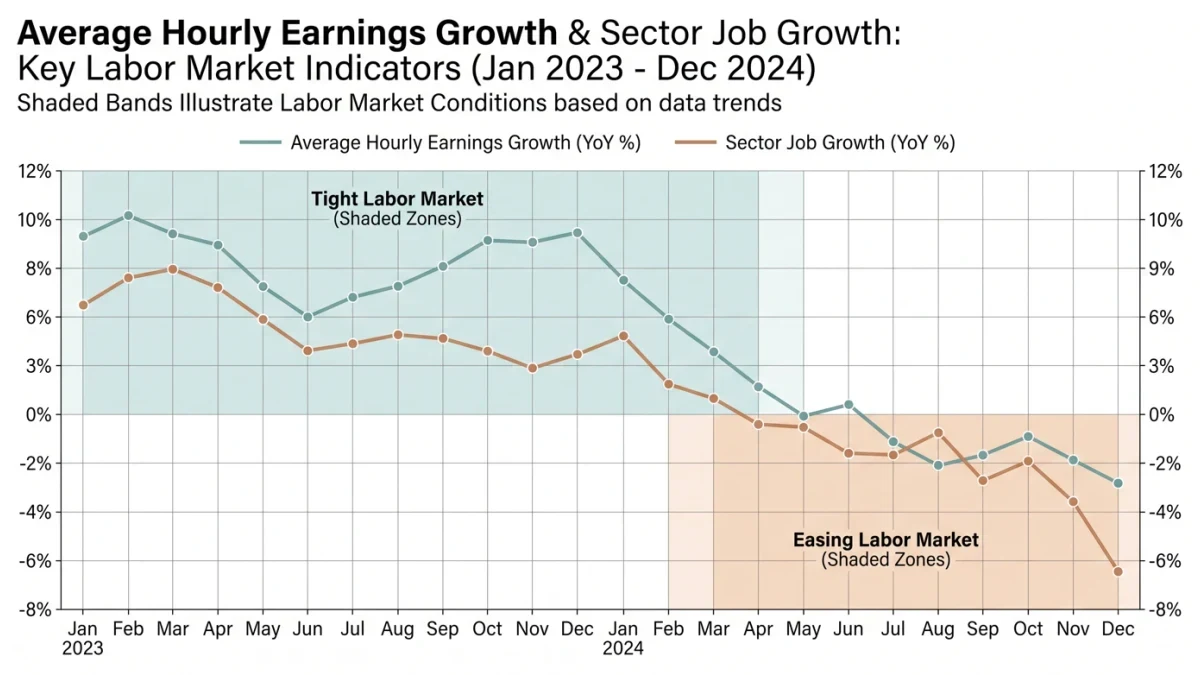
Payroll growth near 50,000 for December, leaving full-year 2025 hiring far below the pace of the post-pandemic years, with the unemployment rate around the low-4-percent range at year end, per the release. The weak payroll print continued the deceleration visible through the second half of 2025 — a slowing consistent with the low hiring and stable unemployment pattern that the household and establishment surveys had been showing side by side. Both the level and the framing here are the release's own: first estimate, partial response, two monthly revisions scheduled, benchmark to follow.
How should the print be read?
With the standard instruments this site applies to every jobs report: the two surveys read jointly, the published standard errors respected — monthly payroll changes of this size sit well inside the confidence band, so the difference between a weak and a modest month is statistical more than economic — and the vintage named. The following release, delayed by the government shutdown then beginning to bite into statistical operations, would carry January data plus the benchmark revisions that cut 2025's total job growth down to a fraction of its pre-benchmark level — the statistical machinery doing, loudly and publicly, what it is designed to do. The December number was the last calm print before that correction wave; readers quoting it without its vintage are quoting a number the record has already moved past.
What comes next, by the calendar?
The January Employment Situation — delayed past its scheduled early-February date by the shutdown — would report around 130,000 January jobs and a 4.3 percent unemployment rate alongside the downward benchmark revisions, with coverage of the delays documenting the collection disruptions. The Bureau's release pages and technical notes at bls.gov carry the full series with all vintages and the shutdown-impact notes — the primary record this summary points to.