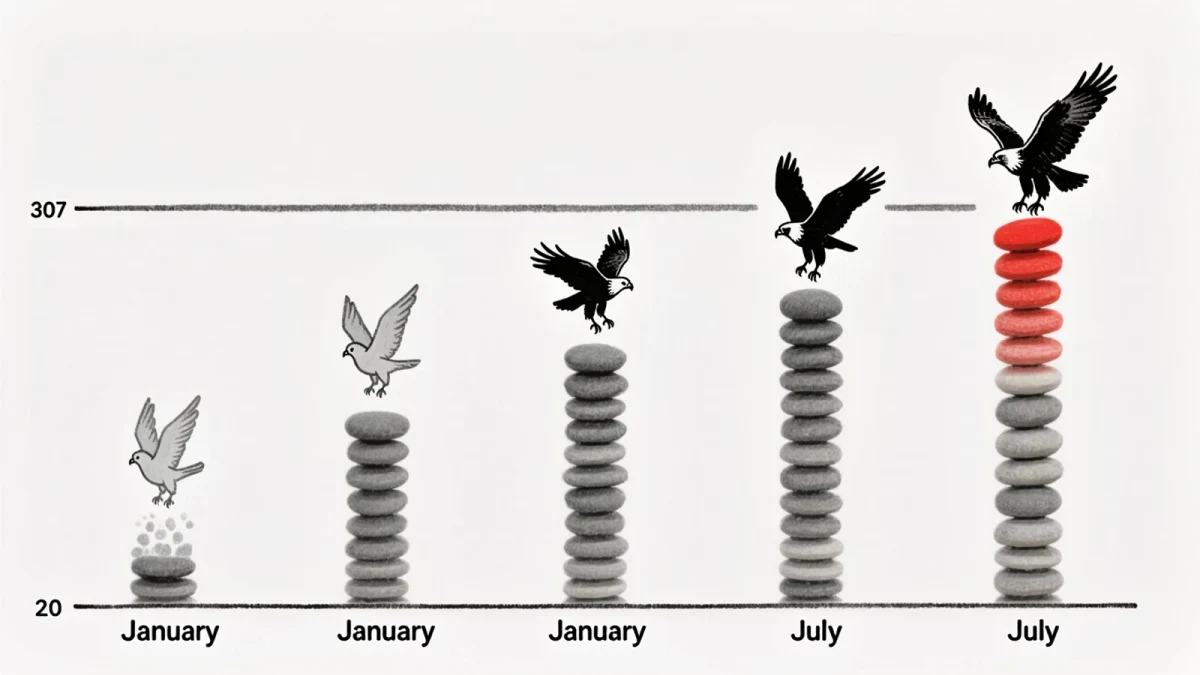

A finance media diet fails in one of two ways. Either it is all daily news, and you know every headline but can explain none of it. Or it is all long-form, and you sound thoughtful at dinner while missing what moved markets this morning.
The fix is a structure, not a subscription spree. Pair one daily finance news podcast for what happened with one or two slower formats — narrative series, interview shows, book-length audio — for why it happened. The daily layer keeps you current. The slow layer is where understanding actually accumulates.
This piece sets out how to build that structure: what each layer does, how to pick shows for both, and the listening habits that separate a diet from a queue.
Why does fast news alone leave you underinformed?
Because a daily show's job is coverage, not comprehension. A daily briefing compresses a market day into twenty or thirty minutes. It tells you the CPI print, the Fed decision, the earnings surprise. What it cannot do, in that format, is hold a single thread long enough for you to understand it.
Slow formats do the opposite. A narrative investigative series spends whole episodes on one story. An interview show lets an economist talk for an hour without interruption. Neither will tell you what happened today. Both will change what tomorrow's headlines mean to you.
The tension between the two is the point. When a daily report and a deep-dive disagree in emphasis — the headline says one thing, the long-form context says something more careful — that gap is where your own judgment forms. A diet with only one layer never produces that friction.
What belongs in the fast layer?
One daily finance news podcast, chosen for discipline rather than personality. The test is simple: does the show distinguish what was reported from what was inferred? A good daily show attributes its numbers, names its sources, and resists turning a data release into a narrative.
The supply is enormous. Aggregators list news shows alongside everything else — iHeart's podcast directory surfaces daily news programs such as NBC's The Daily next to comedy and true crime, which tells you something about how undifferentiated discovery still is. Genre pages on Spotify group news and politics shows together, but grouping is not curation. You will have to do the quality control yourself.
Two rules keep the fast layer honest. First, cap it: one daily show, maybe two. Beyond that you are hearing the same three stories restated. Second, treat every number you hear as a prompt to verify, not a fact to store. If a show cites a jobs report or an inflation print, check the primary release before repeating it. Our own finance news coverage exists partly because retellings drift from the data.
What belongs in the slow layer?
Formats that trade timeliness for depth. Three kinds earn their place.
- Narrative and investigative series. These unpack one story across episodes — a fraud, a collapse, a market mania. They teach mechanism: how a scheme actually worked, which control failed, who looked away.
- Long interviews. An hour with a practitioner or researcher, unedited enough to contain hesitation and qualification, is worth more than ten five-minute hit segments.
- Thematic explainers. Shows that take one concept per episode and hold it still long enough to be understood.
WIRED's curated best-podcasts guide groups shows by category, including economics and business, and its editors' selections illustrate the difference in kind: an investigative series such as The Dropout reconstructs the Theranos failure episode by episode, while its economics picks favor shows that explain rather than react. The guide also notes that while most podcasts are free, paid subscriptions — from roughly $6 to $9 a month across several major publishers — buy ad-free feeds and bonus episodes. That is a convenience purchase, not a quality guarantee.
For finance specifically, weight the slow layer toward shows that show their work: methodology, data sources, error bars. A program that says "we don't know" is a better long-term companion than one that always has a take.
How do you actually build the diet? Practical steps
What this means in practice is a small, fixed roster with room to rotate. The steps:
- Pick one daily show. Listen for two weeks. If you cannot recall a single number it explained correctly, swap it.
- Add two slow shows. One narrative, one interview or explainer. These can be on weekly or irregular schedules; depth shows often are.
- Fix the proportions. A workable split is roughly one fast hour for every two slow hours. Daily news is cheap to produce and easy to overconsume.
- Use the tools your app gives you. Apple Podcasts, for instance, offers transcripts, playback-speed controls, and channels that group a creator's shows in one place. Transcripts are quietly valuable for finance: you can quote-check a claim or skim a slow passage instead of skipping it.
- Prune quarterly. Drop any show you skip more than you finish. A diet you don't follow is a wishlist.
Pair the audio with a reading habit if you can. A written weekly briefing — the kind we set out in The Weekly Finance Briefing: How to Build the Habit — forces slower processing than audio does and gives you a place to check what the podcasts claimed. The two media correct each other.
Where does this approach fall short?
Three honest limits.
First, curation quality is on you. Discovery surfaces are built for engagement, not accuracy. Charts and genre pages mix rigor with noise, and no aggregator currently labels a show's sourcing standards.
Second, audio is a weak format for numbers. A statistic heard once in traffic is not retained the way a read one is. Transcripts and show notes help; use them.
Third, no media diet substitutes for primary sources. If a podcast says the Fed held and two members dissented, the primary release is the record. Our own coverage of the July FOMC vote starts from the transcript, not from anyone's summary of it. A diet built on summaries, however well chosen, is still a diet of summaries. We covered a connected angle in July FOMC holds again — this time with three members voting to raise.
The takeaway: two speeds, deliberately mixed
Understanding in finance comes from repetition across formats, not exposure to any one. The daily show tells you what happened and primes the question. The slow show answers it, weeks later, properly. Keep the fast layer small, the slow layer substantial, and verify every number against the source it came from.
The listeners who learn the most from podcasts are not the ones who hear the most episodes. They are the ones whose queue has a shape.