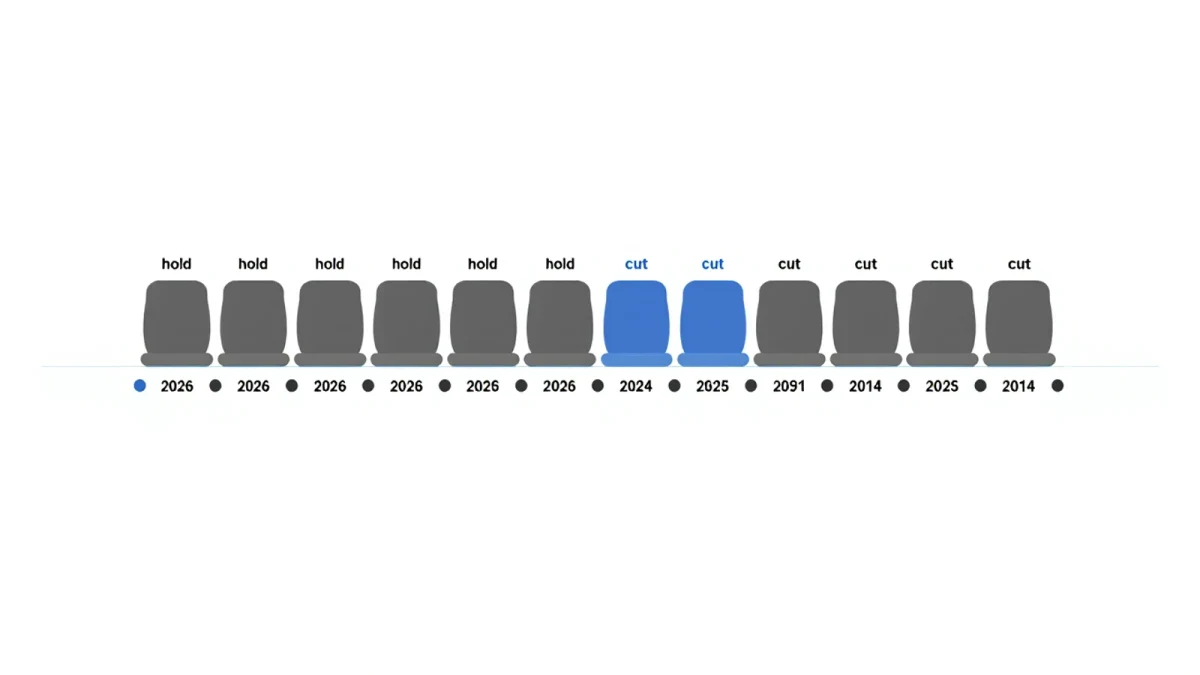
The Federal Open Market Committee held the target range at 3.50 to 3.75 percent on April 29, 2026 with four dissents — one favoring a cut and three objecting to retaining the easing-bias formulation in the statement — while the text attributed elevated inflation partly to recent increases in global energy prices, per the statement published by the Federal Reserve.
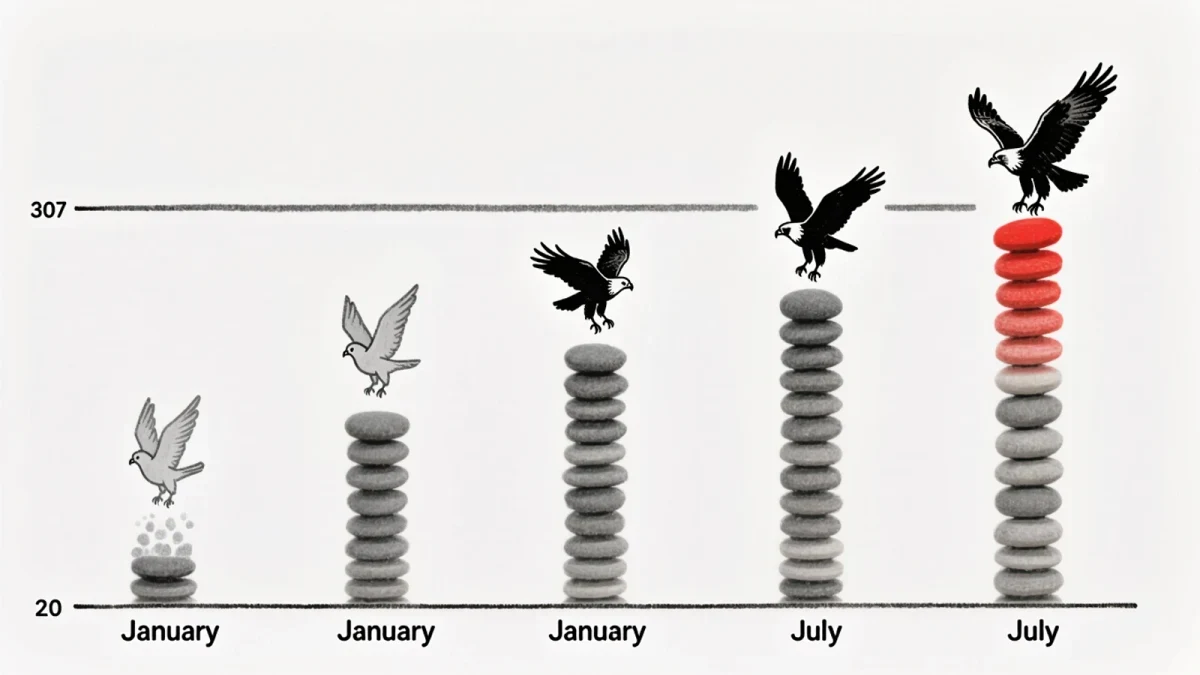
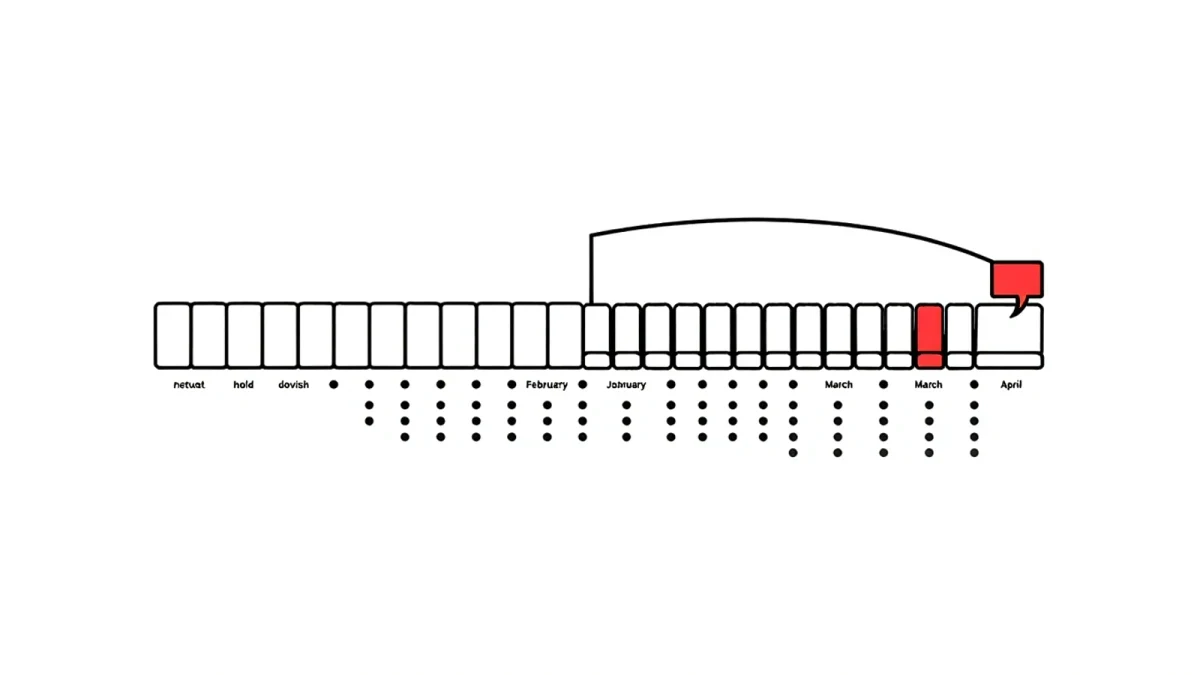
Four dissents is a wide split by FOMC standards — the committee went from two dissenters in January to one in March to four in April — and the structure of the split is the notable part: a majority of the dissenters objected not to the rate decision but to a sentence, the forward-leaning clause signaling preparedness to ease. Disagreement migrating from the action to the language is a specific, readable state of a committee.
What is an easing bias, mechanically?
Statement forward-guidance clauses run from symmetric — ready to adjust either way — to biased, signaling direction. The April statement retained language of the prepared-to-ease type, and three of the four dissenters voted against the statement specifically because of it, the published vote description shows. The economics of the objection track the statement's own inflation sentence: with headline inflation elevated partly on energy prices, members arguing against an easing bias are arguing that the balance of risks no longer tilts toward cuts — while the majority held that the clause, and the rate, should stand until more data arrives. Both positions live inside the dual mandate; the disagreement is about which risk is currently larger.
How does this statement read against March?
As an amplification on both tracks. The Middle East sentence introduced in March was retained and extended — inflation described as elevated partly reflecting global energy prices — and the vote fractured further. The sequence January to April — 12-2, 12-1, then 12-4 with a language objection dominating — documents a committee whose center is holding the range while its disagreement grows in both directions at once: one cutter, three objectors to dovish wording. June would pass 12-0 under the shortened statement format introduced that month, and July would bring three hawkish dissents favoring a hike — the full arc readable in the published texts at federalreserve.gov.
What should a reader take from a four-dissent statement?
Exactly what the document supports: a committee split wider than usual, over wording as much as action, with the inflation description now explicitly carrying an energy attribution. What it does not support — despite the genre's habits — is any inference about the next meeting's outcome: dissents are positions, not predictions, and the same committee that produced four dissents in April produced a unanimous vote in June. The measurable content of the April meeting is the vote, the clause and the inflation sentence; the rest is modeling, which is a different activity with different obligations.