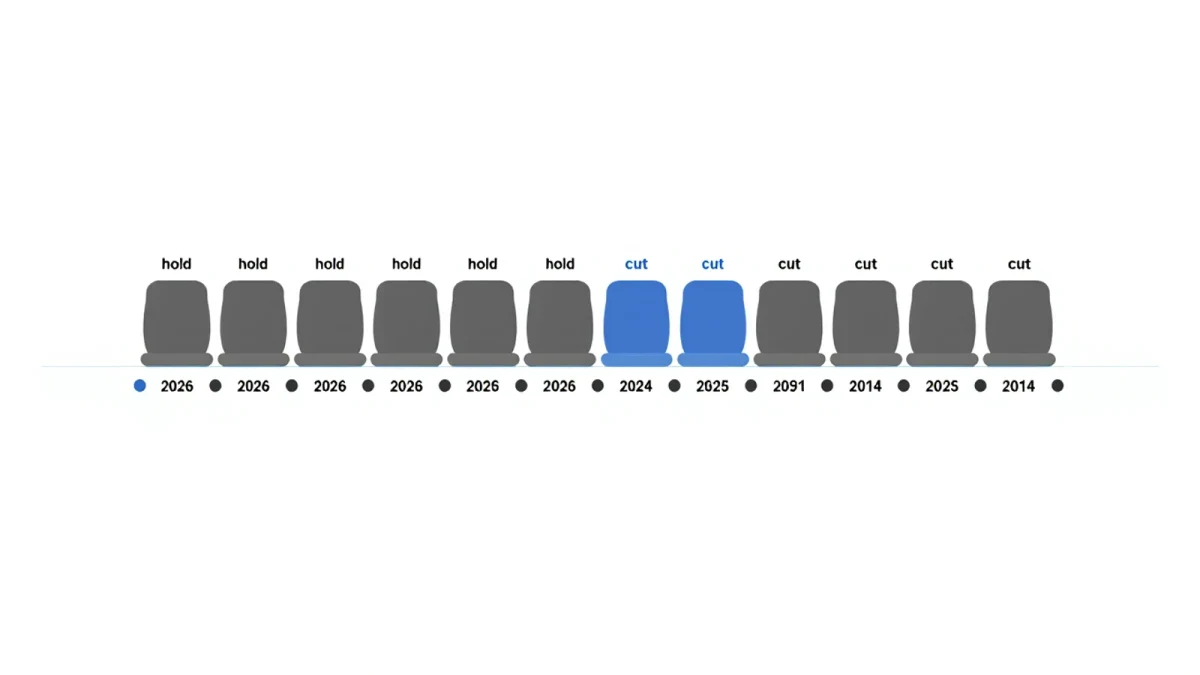
The Federal Open Market Committee held the federal funds target range at 3.50 to 3.75 percent at its January 27-28, 2026 meeting, with two members dissenting in favor of a lower rate, per the statement published on the Federal Reserve's site.
The first meeting of the year set the tone the 2026 calendar would carry through midyear: a committee holding its range while its internal disagreement grew from two dissents in January to four by April. Statement arithmetic — vote counts and language deltas — is the most auditable part of monetary policy, and both moved.
What did the statement say?
The Committee maintained the target range established through the 2025 easing cycle and reiterated the standard framework: decisions meeting by meeting, conditioned on incoming data and the dual mandate. The two dissents — members preferring a 25-basis-point cut — marked the first division of the year. Language changes from the December statement were incremental rather than structural, which is itself informative: a committee content to describe the economy in nearly the same words while two of its members vote to move.
How does this fit the 2026 arc?
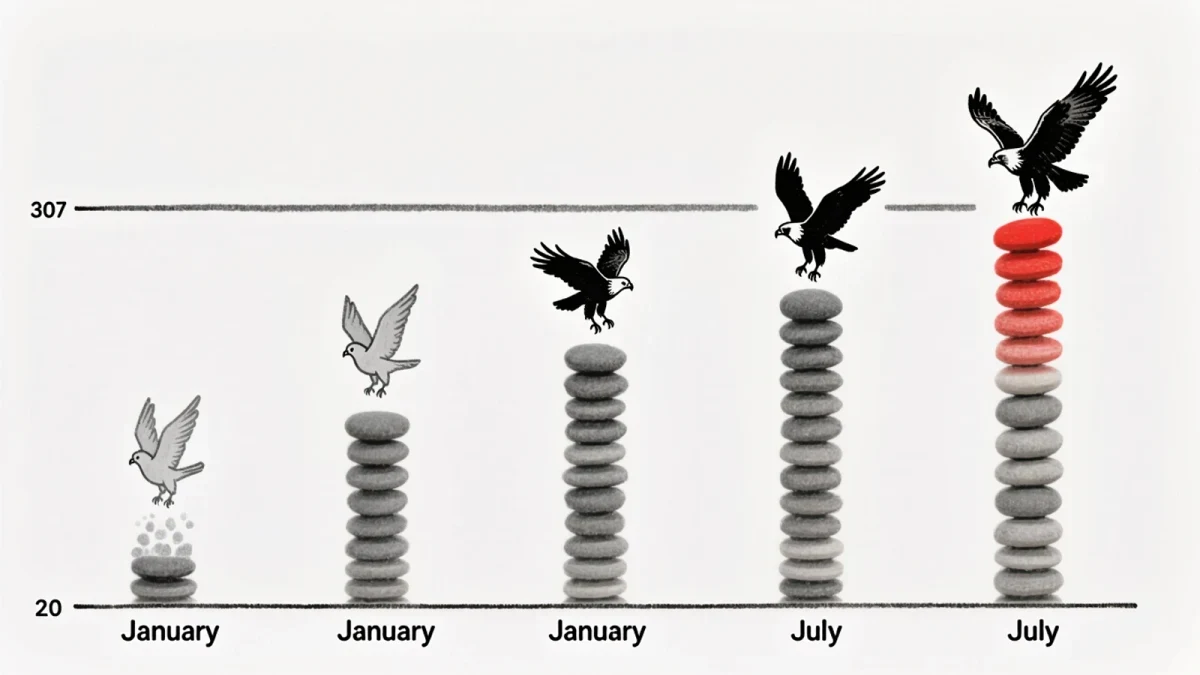
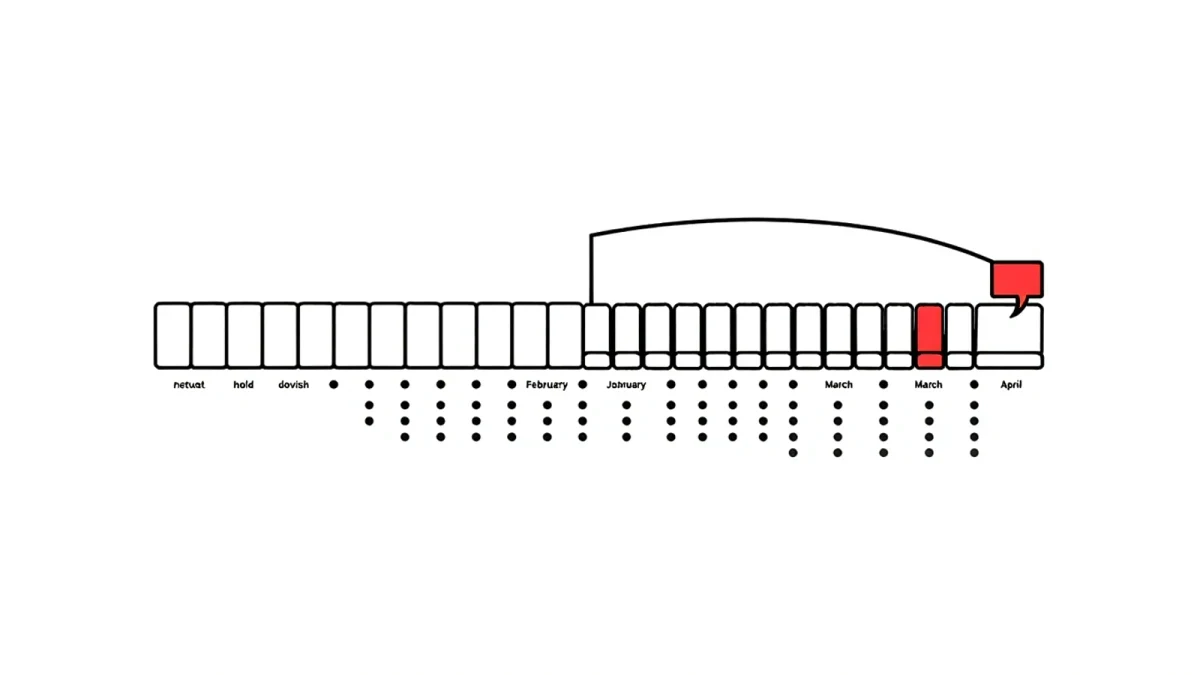
As the opening data point of a dissent-building sequence. March brought a single dissent in the same direction and a new clause on Middle East developments; April produced four dissents — three of them objecting specifically to retaining the easing-bias formulation amid rising global energy prices; June passed 12-0 in the newly shortened statement format; and July brought a 9-3 vote with all three dissenters favoring a hike, the year's first hawkish dissents, per the respective statements on the Federal Reserve's site. The January meeting is where the gradient starts — and the discipline this site applies to such sequences is the same as for any time series: the votes are the votes, the interpretation belongs to the models built on them.
What is measurable in a statement?
Three things, precisely. The action: target range, unchanged here. The vote: 12-2 style counts with named directions, published with the statement. The language: deltas against the prior statement, checkable by anyone with both texts and an hour. Everything else — what the committee is signaling, thinking, or about to do — is model output, and models carry their conditions. The primary documents for the entire 2026 sequence are at federalreserve.gov, where statements, minutes and projections are published on a stated calendar.